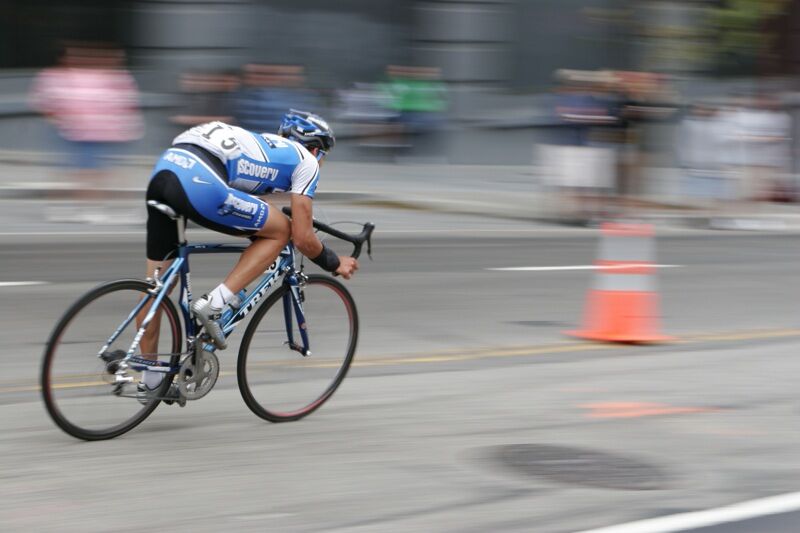
Runners have always had clear metrics
🏃♂️ How many minutes to run a mile?
⏱️ How many seconds for 100 or 200 meters?
But in cycling — especially outside the velodrome — performance wasn’t so easy to measure until the early 2000s.
💓 From Heart Rate to Horsepower
In the 1980s, the wireless heart-rate monitor gave cyclists their first glimpse into how hard they were working. That “burning” feeling near the top of a climb? Lactate.
But heart rate alone wasn’t precise. Too many variables — wind, terrain, temperature — got in the way.
What cyclists really needed was a way to measure power.
⚙️ Enter the Power Meter
In the early 1990s, SRM (Schoberer Rad Meßtechnik) built the first cycling power meter.
And who was the first to use it? Greg LeMond — also the pioneer behind clipless pedals (Look), Oakley wraparounds, and aero bars (Scott).
For the first time, cyclists could measure watts — their real mechanical output.
By the early 2000s, PowerTap made power meters affordable, bringing this pro-level insight to thousands of riders.
📊 Turning Data Into Insight
Suddenly, every pedal stroke, heartbeat, and watt was recorded.
But — just like in finance — data without context is noise.
Then came Hunter Allen and Dr. Andrew Coggan with their 2006 breakthrough Training and Racing with a Power Meter.
Dr. Coggan’s “Functional Threshold Power (FTP)” gave cyclists a definitive benchmark — and training went from guesswork to data science.
🛰️ GPS + Strava = A Revolution
Then came GPS. Garmin bike computers tracked power, speed, and location.
And Strava made it social — turning roads into competitive “segments” and riders into data-driven athletes.
With over 100 million users, Strava’s anonymized data is even sold to cities to optimize traffic flow and urban planning.
🤖 The AI Era
Today, when I upload a ride, AI tells me my recovery state and fitness trends.
Tour de France winners have never trained without a power meter — and now, with AI regression models, teams know exactly what worked and what didn’t.
Cycling has become a living case study in data-driven performance optimization.
💼 Lessons for Financial Services
What cycling teaches us about AI and data applies equally to banks, insurers, and asset managers:
⚙️ AI is powerful — but only when grounded in high-quality, well-governed data.
📚 Most organizations are sitting on a mountain of untapped historical data — use it creatively and responsibly.
🎯 Purpose-driven data governance ensures your insights serve the business, not just the algorithm.
📏 And above all: accurate, trusted metrics are everything.
Cyclists measure watts.
Businesses measure value.
Both rely on data — and now AI — to go faster, smarter, and more efficiently. 🚀
hashtag#AI hashtag#DataStrategy hashtag#DataGovernance hashtag#FinancialServices hashtag#Cycling hashtag#Analytics hashtag#Performance hashtag#MachineLearning hashtag#Strava hashtag#DigitalTransformation hashtag#TrustedData hashtag#DataDrivenLeadership